
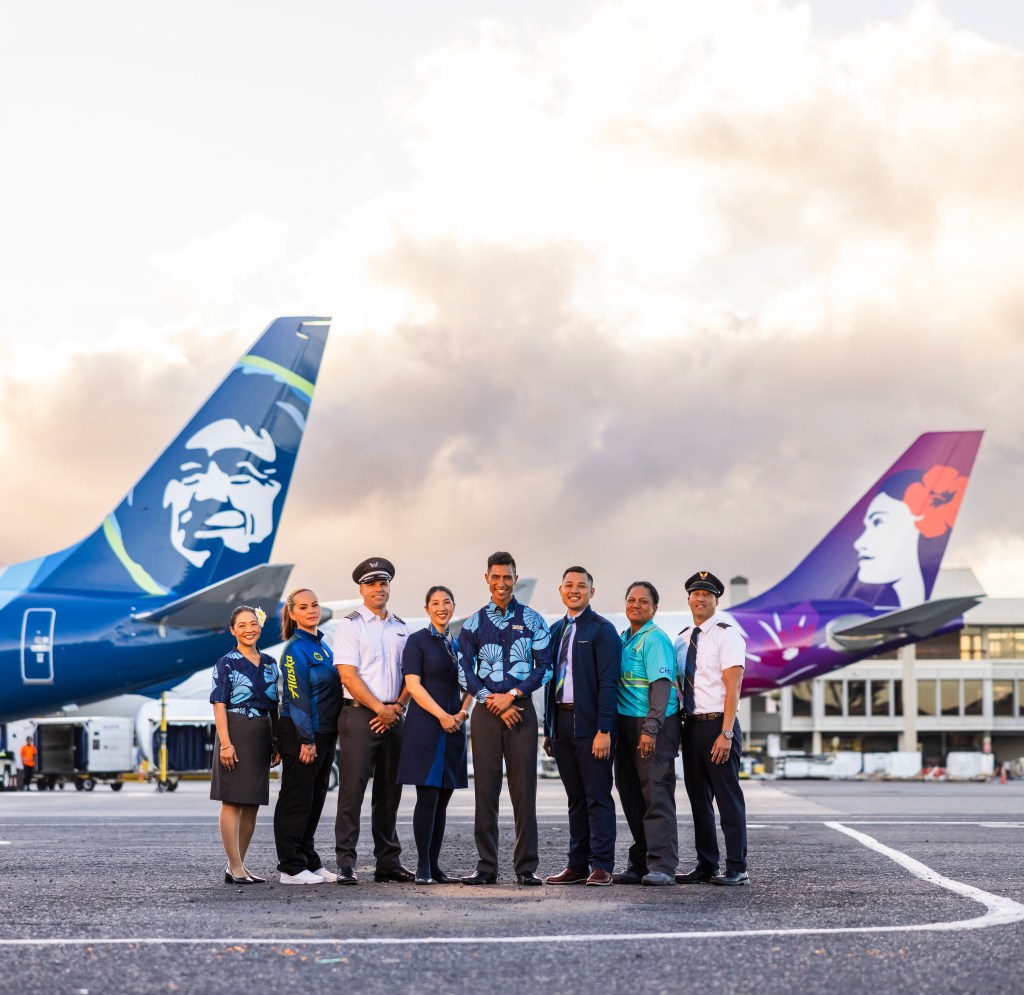
It’s been an exciting year for Alaska Airlines! With the acquisition of Hawaiian Airlines and merger into Alaska, a grand project was started that could have all sorts of consequences. Changes to frequent flyer programs, implications for the fleet, and the potential for an expanded route network. While previous news has centered around the consequences for a unified Hawaiian x Alaska frequent flyer program, today’s news is all about route and fleet plans.
- Alaska Airlines positions Seattle as it’s ‘Global Gateway’
- Alaska introduces new international routes, starting with Tokyo and Seoul
- Expansion of daily flights accommodates increased connectivity between Hawaii and mainland US
- Hawaiian-branded planes center around Hawaii; Alaska-branded planes everywhere else
- Summary
Alaska Airlines positions Seattle as it’s ‘Global Gateway’
The biggest news today is undoubtedly that Alaska Airlines plans to position Seattle as it’s global hub. That Alaska would make Seattle it’s biggest and most important hub is not surprising – but what many of us have been waiting for is any sort of news that Alaska may start international flights. Why? Because with the acquisition Alaska suddenly has some long haul planes (B787 and A330). Will these solely be flying existing Hawaiian routes, or will Alaska reposition these aircraft to better serve it’s overall route network? We now have the answer: with the branding of Seattle as it’s ‘Global Gateway’, it’s now clear that Seattle will not just be a domestic ‘fortress hub’ for Alaska, it will also be the central origin of a new (and expansive?) international route network.
This is an exciting step for Alaska, and I would argue also for Alaska’s customers. Now, I can see that there is probably some skepticism with regards to the choice of Seattle as a global hub. Why choose a city that appears so ‘out of the way’, when looking at the overall geography of he USA. There are a few considerations here:
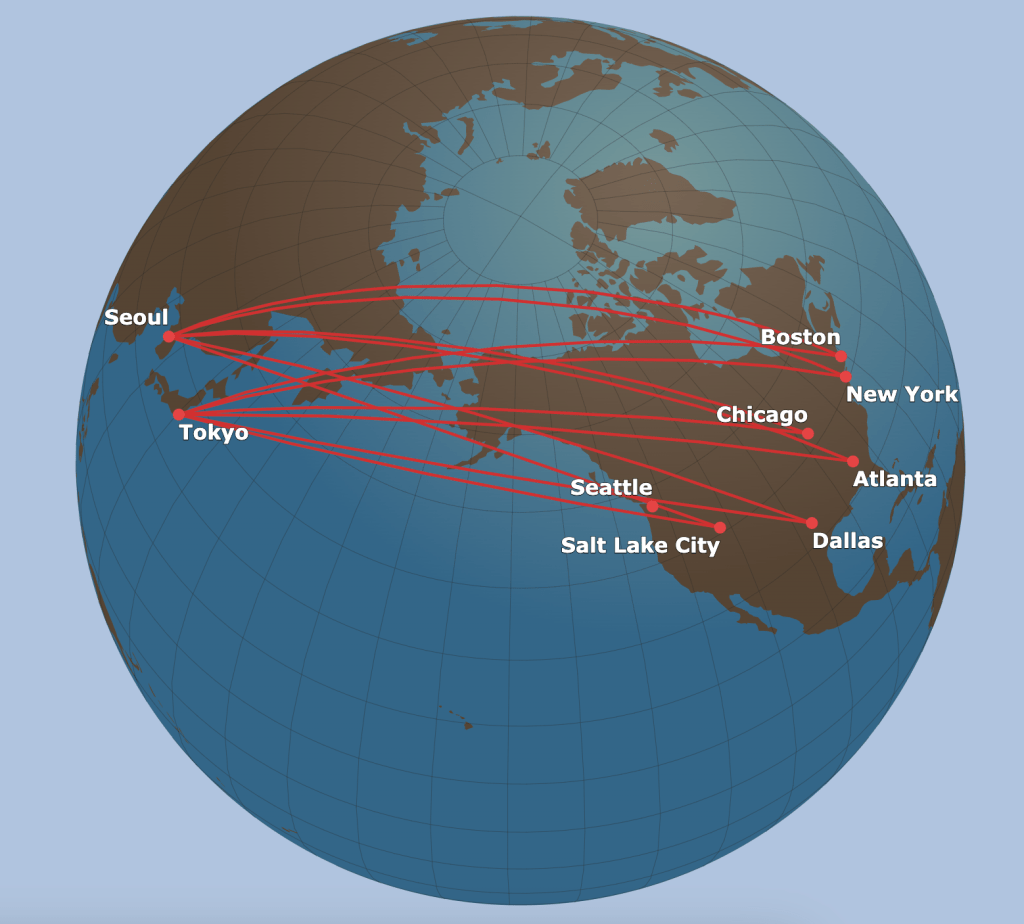
- The idea that Seattle is out of the way holds up when you think of it within the USA, but remember that we’re tlaking about its position as a ‘global hub’, and especially in relation to trans-Pacific flights. Viewed from that way, Seattle is a very logical place for a stopover. To understand why, just have a look at the below routes from the US east coast and midwest to Tokyo and Seoul:
- On another note, Seattle is Alaska’s ‘hometown’ airport, with a large, loyal customer base that preferentially flies Alaska Airlines over competitors. That is despite the fact that Delta Airlines has historically also tried to ‘get big’ at Seattle. So if Alaska would try long haul flying from anywhere, Seattle would be the most logical place.
- Following on from this point, given that Alaska is such a powerhouse in Seattle (104 destinations!), it has a truly expansive domestic route network that can leveraged to funnel passengers to Seattle for their longhaul flights. That is the same operational model used by e.g. American when it funnels you through DFW, or Delta funnels you through ATL.
So, all in all, Seattle makes a lot of sense as a ‘global hub’.
Alaska introduces new international routes, starting with Tokyo and Seoul
So where is Alaska flying from their global gateway? Alaska is planning to fly nonstop to at least 12 global destination by 2030, which means they would need to add 2-3 new such destinations every year for the next 5 years, which is an incredible pace to add new destinations at.
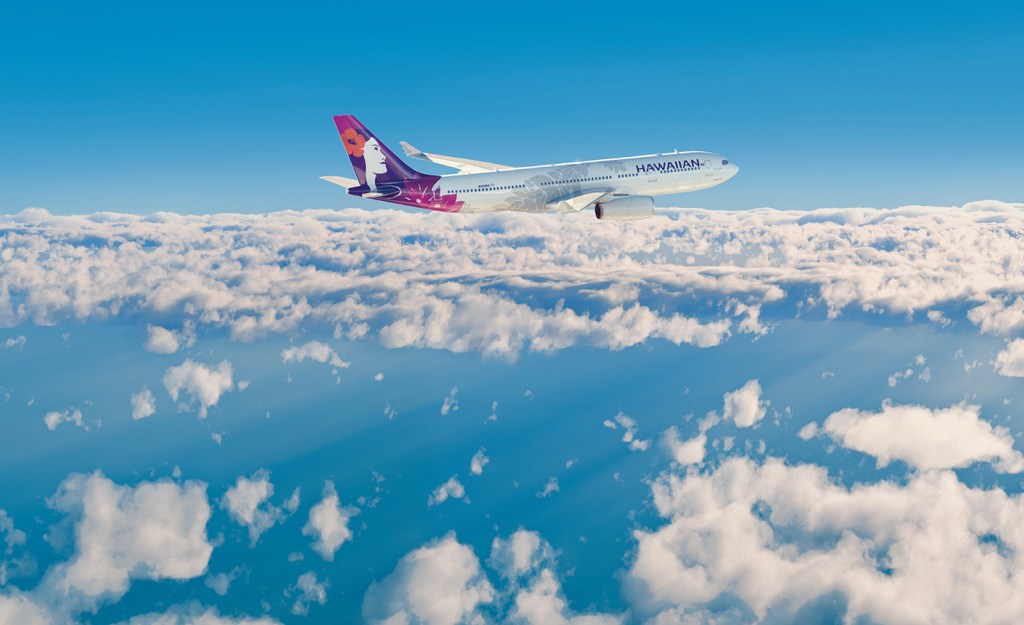
For next year, Alaska will start flying to Tokyo-Narita and Seoul-Incheon to start. Flights to Tokyo will start May 12, whereas flights to Seoul will start in October. These flights will be operated by Hawaiian’s Airbus A330-200 aircraft, which is perhaps a little disappointing given that Hawaiian has recently started flying its new B787 aircraft, which feature. avastly improved passenger experience.
Starting out with Tokyo and Seoul seems sensible. For one, these are of course popular destination in and of themselves. Further, Alaska partner with both japan Airlines and Korean Air, and so should be able to use these respective airlines domestic and intra-Asia route networks on that side of the Pacific.
For me there is just one caveat here. I don’t know about you, but for me, if I’m flying to Asia I’ll almost certainly try to fly with an Asian airlines given the much higheer service standard of Asian carriers. Flying to Japan I’ll prioritize flying Japan Airlines or ANA, while to Korea I’ll fly Korean Air. It’s rather unlikely I’ll want to fly on a US airline. The only time I’ll fly with a US airlines to Asia is if the price is right. So, I had a look to see what sort of prices we cna find right now:

As you can see, if we’d buy these tickets right now for a roundtrip flight from New York to Japan on May 16-25, economy comes out on ~$750-800, and business $5400-6200. These prices are not bad and probably towards the low end. Looking at Google Flights, I can find Air Canada flights for $750, whereas Japan Airlines and ANA are in the $1000-1200 range. Business class the difference is much starker, with Alaska’s price range similar to competitors, and Japan Airlines and ANA being at $8000+. So, Alaska’s offer could represent some good value.
Expansion of daily flights accommodates increased connectivity between Hawaii and mainland US
Besides the above, Alaska is also reconfiguring flights to Hawaii. This is in part to accomodate the plans for Seattle flight,s but also to allow better connectivity between mainland east and west coast for flights between the west coast and Hawaii. These are the announced changes:
- Hawaiian will stop flying from Honolulu to Tokyo-Narita, instead focusing on flying to Tokyo-Haneda. Alaska suggests that after the pandemic, passenger levels have never quite recovered and this move ‘right-sizes’ capacity.
- Seattle to Honolulu flights will see 20% more capacity due to the use of widebody aircraft. It doesn’t seem there will be additional flights.
- Portland to Honolulu will see an increase of 25% in capacity, representing three daily nonstop flights.
- San Diego will see an additional flight to Honolulu, and ‘newly timed’ flights to Maui.
- Flights between the west coast and Hawaii will be better-timed to serve connections to and from the east coast. This includes red-eye flights from Maui to SanDiego, and Honolulu to Portland and San Francisco.
- Two new nonstop routes will be added: San Francisco to Kona (Hawaii) and Lihue (Kauai), both at four times a week.
Hawaiian-branded planes center around Hawaii; Alaska-branded planes everywhere else
Finally, in a separate announcement, Alaska revealed the branding strategy for the combined airline. From the start, Alaska said that the Hawaiian brand would be maintained following the merger, but it was always a guess how exactly that would play out. Historically, when US airlines have acquired competitors, only one brand survived, though if w elook globally there are certainly examples to the contrary. For example, Air France/KLM have maintained both brands within the same company, with each airline centered around it own (originating) country, with its own loyal customer base.
The situaiton for Alaska and Hawaiian is on the one hand similar, yet also quite different. On the front end, we’re seeing that Alaska will follow the same idea: the Hawaiian brand will center around the Hawaiian islands, with flights to and from Hawaii being flown by Hawaiian-branded planes, and every other flight in Alaska’s network being flown by Alaska-branded planes.
This makes sense from the perspective that both Hawaiian and Alaska have loyal customer bases at their respective hubs, i.e. Honolulu and Seattle. Also, it makes sense to fly a Hawaiian plane to Hawaii specifically, given how the connotation of the brand is tropical and ‘vacation-y’. Though, Alaska of course flies all over the place in the US, so the brand really doesn’t need to be so location-bound.
On the flip side, this strategy also implies that there is very strong segregation within the company between certain ‘sets’ of planes and crews, with a general lack of interchangeability and flexibility. For example, can a Hawaiian-branded plane operate Honolulu-Seattle, and then go on to Tokyo or must it return to Honolulu? This doesn’t seem like a particularly streamlined or efficient way of operating a company, but I suspect we will have to wait and see to better understand what the practical implications are of this strategy

Summary
Alaska Airlines has today revealed some key strategies on how it intends to position it’s Seattle hub in the future. Alaska revealed that it plans to grow Seattle as a global gateway, announcing the addition of at least 12 nonstop global destinations by 2030. They will start with flights to Tokyo and Seoul, ith additional destinations being revealed at a later date. As of right now, pricing seems reasonable, although it’s perhaps disappointing these initial routes will be served by Hawaiian’s older Airbus A330-200.
Further, Alaska is making some changes to its routes serving Hawaii, adding capacity and changing timings to allow additional connection options for those connecting from the east coast.
Finally, Hawaiian plans to maintain the Hawaiian brand by manner of branding flights to and from Hawaii as ‘Hawaiian’ flights, and everything else as ‘Alaska’ flights. We will need to wait and see to find out how this will play out exactly, but I’m nonetheless pleased that the Hawaiian brand will be maintained in such a substantial way.


 Points to Seats
Leave a reply to Alaska Airlines has a new loyalty program and a new premium credit card: What’s changed? – Points to Seats Cancel reply