

In the world of credit cards the Bilt card has been unique in that it’s the only card that allows you to earn points on rent. For many, myself included, the card was a slam dunk for the simple reason that it had no annual fee and earned rent at a 1x rate, and if you combine that with some of Bilt’s unique transfer partners (including Alaska Atmos and JAL Mileage Bank) there really was no reason not to get it if you are renting.
That all changes on February 7. Bilt today announced the details of the card’s revamp: Bilt 2.0 changes just about everything about the original card, and not in a good way. Let’s dive into the details, and what this means for users of the original card in practical terms.
- How the old card worked: some historical context
- The new model: spend on non-rent/mortgage categories to become eligible for points on rent and mortgage
- The new Bilt 2.0 card portfolio
- You can choose which card you want to transition to, and here’s how
- With these changes, earning points on rent is no longer worth it for most users
- Which card should you transition to? The Palladium card is the only card with some potential
- My strategy with the Bilt 2.0 lineup
- Summary
How the old card worked: some historical context
To understand how massive the changes are, let me first describe the way the current/old (v1.0) card worked. This card was in partnership with Wells Fargo. It is a no-annual-fee card that earns 1x points essentially on everything, including rent. However, to earn that 1x on rent you’d have to make at least 5 not-rent related transactions every month.
The expectation was that users would switch their spending over to Bilt in a way that would balance out the many points that were earned through rent, but this never materialized and Wells Fargo reportedly lost many millions every month on Bilt. It seems many people simply put 5 (small) transactions onto Bilt to qualify for rent points, and that was it (my husband and I did the same thing). Clearly, this was not sustainable and we have known for a while that Wells Fargo decided to pull out.
This ultimately prompted Bilt 2.0, now in partnership with Cardless, which also has partnered with various other companies, including airlines including Qatar Airways and Avianca, to release credit cards. But this time around, it was clear the business model would have to change in order for the points on rent to remain sustainable. How would that be accomplished? That’s what we learned today: we now know the details of the new cards (now three instead of just the one) and how points on rent will be handled.
The new model: spend on non-rent/mortgage categories to become eligible for points on rent and mortgage
This is an update based on changes that followed soon after the initial release of Bilt 2.0. The gist of the system stays the same: you need to spend money using your Bilt credit card on spending categories that are not rent or mortgage in other to become eligible to earn point son rent or mortgage. The change that was announced, however, adds some flexibility in how you become eligible.
Important to understand in all of this is that the minimum spend on non-rent/mortgage purchases is described as a percentage of the total dollar value of your rent/mortgage. So, is the minimum is 50% and your rent is $2000, it means you need to spend 1000$ on non-rent/mortgage purchases to become eligible to earn points on rent/mortgage.
Let’s start with the method that was added only later, since it’s the easiest to understand:
Method 1: Earn points from rent or mortgage directly after a qualifying spend on other categories.
Method 1 is very similar to how Bilt 1.0 used to work, outlined above, with some changes:
- The minimum spend required on non-rent/mortgage purchases is 25% under Method 1. At 25% you will earn 0.5x points on rent and mortgage payments.
- The more you spend on non-rent/mortgage purchases, the higher the points earning rate on rent/mortgage.
- The maximum point earning rate is 1.25x, but this requires spending 100% of the dollar value of your rent/mortgage on non-rent/mortgage purchases.
- However: this is all in lieu of earning Bilt cash, so if you end up not spending enough on non-rent/mortgage purchases, you could potentially end up with zero rewards, which would be a total waste of effort!
For completeness sake, here is the full table with spending requirements and points earning rate on rent/mortgage:
| Points on Housing | Minimum everyday spend as a % of monthly rent / mortgage (Example of $2,000 rent) |
|---|---|
| 0.5x points | Spend at least 25% of monthly rent ($500) |
| 0.75x points | Spend at least 50% of monthly rent ($1,000) |
| 1x points | Spend at least 75% of monthly rent ($1,500) |
| 1.25x points | Spend the same or more as your monthly rent ($2,000) |
Now let’s move on to the infinitely more complex second method.
Method 2: Earn Bilt Cash, which you can redeem against your rent or mortgage payment to earn points.
The second method is complex, so let’s first look at what Bilt says about this, and then I’ll break it down for you:
Everyday spend now fuels how many points you can unlock on housing payments. The more you use your Bilt Card, the more Bilt Cash you can earn to use to unlock points on housing payments.
For every $30 in Bilt Cash earned, you can unlock 1,000 Bilt Points when you make rent or mortgage payments, across multiple homes. For example, if your rent is $2,000 and you have $60 of Bilt Cash, you can convert your Bilt Cash into 2,000 points on that payment — still with no transaction fee.
So here’s the two main points you need to understand:
- Spending on rent does not actually seem to generate any points at all by itself (though that’s how it used to work!).
- Instead, redeeming Bilt Cash against rent spending is what generates points.
If you put these two things together, here’s how things work out in practical terms:
- You use your Bilt card for non-Rent purchases.
- These purchases earn you 4% Bilt Cash, so for every $1 spent, you’ll earn $0.04 in Bilt Cash.
- Now, you can ‘redeem’ your Bilt Cash against any rent spending you put on the card.
- This will generate Bilt points, at a rate of 100 points for every $3 Bilt Cash you redeem against rent.
In practical terms, it means you need to spend 75% the dollar value of your rent on non-rent purchases, in order to gain enough Bilt Cash that you can get the 1x points rate for your rent.
Let’s consider Bilt’s example. The idea is that in order to earn points from rent at the 1x rate, then if you want to earn 2000 points from $2000 rent, you’ll need to redeem $60 worth of Bilt Cash. Why? Because $3 Bilt Cash generates 100 points. So (2000/100) * $3 = $60 Bilt Cash. To earn that Bilt Cash, remember you earn 4 cent Bilt Cash for every dollar you spend on non-rent purchases. In other words, you’ll need to spend ($60/$0.04) = $1500. Or, 75% of the dollar value of your rent will need to be spent on non-rent purchases in order to earn enough Bilt Cash to get a 1x points rate on your rent.
Note that Bilt Cash can be redeemed for other things as well. As per the press release:
Bilt Cash gives you flexibility: earn it from everyday spend and choose how to use it, whether to unlock points on housing payments, transfer bonuses, and exclusive experiences, or to spend dollar-for-dollar on monthly credits at restaurants, hotels, rideshare, and more.
So, there is definitely room to use the Bilt Cash for other things, at a 1:1 rate. This is important when thinking about the longterm usefulness of the credit cards. Recently the details of what Bilt Cash be redeemed for was also announced, and it’s a veritable coupon book of small, monthly credits. Patience is required but I do think you can get some value from this.
What method is ‘best’?
Either way, I think this is a smart way of handling this on Bilt’s side, but it’s certainly a convoluted thing to subject your users to. Which method is best? Well, I tend to gravitate to method 1, simply because with a lower spend you can start earning some points, which for many suers should be the simpler option. However: you don’t earn Bilt Cash. We recently found out what Bilt Cash can be spent on, and so if you don’t think you will be able to spend enough on the card on non-rent/mortgage purchases to become eligible for rent via method 1, I’d suggest you stick with Method 2, because at least you’ll earn 4% Bilt Cash that can be redeem against various purchases, such as Lyft rides. Grubhub orders, and such.
Note: rent/mortgage payments are deducted from your bank account!
For those of you used to how Bilt 1.0 used to work, this is a noteworthy change: rent and mortgage payments are no longer charged to your card it seems, but rather you provide a bank account when you setup your Bilt account. Then rent and mortgage payments are charged to that account instead.
Now let’s look at the actual cards that can generate all of this:
The new Bilt 2.0 card portfolio
There are three Bilt cards in the 2.0 model. Some features are common to all cards:
- Pay rent and mortgage without a transaction fee. Mortgage payments are new!
- Earn Bilt Cash on every non-rent/mortgage transaction at a rate of 4%.
With that out of the way, let’s look at the three different cards’ features. The bullet points are copied directly from Bilt’s press release:
Bilt Blue Card
This is the cheap, no annual fee option, but it also comes with few features:
- No annual fee.
- 1X points on everyday spend.
- 4% back in Bilt Cash on everyday spend.
- $100 in Bilt Cash on account opening.
- Earn both Bilt Points and Bilt Cash with no annual fee and no foreign transaction fees.

Bilt Obsidian Card
The mid-range card, with a decent annual fee and some more useful earning categories. In some ways, this card reminds of the Chase Sapphire Preferred.
- $95 annual fee.
- 3X points on dining or grocery (grocery up to $25K/year)
- 2X points on travel
- 1X points on all other everyday spend.
- 4% back in Bilt Cash on everyday spend.
- $100 in annual Bilt Travel Hotel credits (two $50 semi-annual credits).
- $200 in Bilt Cash on account opening.
- Trip Delay Insurance, no foreign transaction fees, and more.
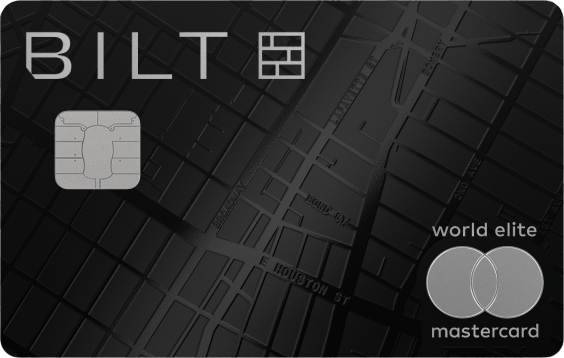
Bilt Palladium Card
This is the most premium card with a big annual fee, but also a bunch of credits that can entirely offset that annual fee:
- $495 annual fee.
- 2X points on everyday spend.
- 4% back in Bilt Cash on everyday spend.
- First-ever, limited-time 50,000-point sign-up bonus + Gold Status (after qualifying spend).
- $300 in Bilt Cash on account opening.
- $400 Bilt Travel Hotel credits (two $200 semi-annual credits)
- $200 in Bilt Cash (issued annually, $100 can be rolled over to the next year).
- Additional premium benefits, including Priority Pass access, purchase protection, no foreign transaction fees, authorized users and more.

You can choose which card you want to transition to, and here’s how
For current card holders, take note: you have to make a decision on whether you want to transition to one of these three cards or not by January 30th, and the new cards will ‘kick in’ on February 7th. If not, you will transition to a the Wells Fargo Autograph Signature card.
If you do want to transition to these cards, you can do so through the Bilt app or website. If you transition:
- You will keep your same card number – subscriptions and autopay continue uninterrupted.
- Automatic updates to Apple Pay and Google Pay.
- The transition will require an approval from Cardless, but will not result in a hard credit inquiry.
- If you don’t transition and instead apply later on, you will get a hard inquiry, so it’s best to transition now rather than applying later.
To start the process, go to the Bilt website and navigate to the special page featuring the new credit cards, then login to your account. Click ‘Apply Now’ and you’ll be presented with these three cards and asked to select the one you want.

You’ll confirm your income and monthly rent or mortgage payment, after which an approval process wil start. We just went through this and were approved with a hefty credit line. Once approved, you can choose to accept the offer until January 30th. We accepted it immediately, which prompts a series of questions: whether to transfer your current balance, what to do with the Wells Fargo card (keep the credit line or close it), and whether to add a bank account to pull rent payments from. With that, the process will complete. You can expect an email in your inbox confirming your acceptance of the approved card.

With these changes, earning points on rent is no longer worth it for most users
Sine there are two ways to generate points with rent, the question of whether it’s worth it or not is complicated and very personal. However, I do think that there is a fundamental problem with Bilt 2.0: you need to spend on non-rent/mortgage purchases on Bilt cards that are just not optimal for doing so. This is true regardless of whether you use method 1 or 2. Let’s look at the categories that earn an above 1x rate with any of the Bilt cards:
- Dining and groceries: Amex Gold has an unbeatable 4x return. Friday and Saturday nights, the Citibank Strata Elite gets you a 6x rate. Even cards like the Citibank Strata Premier earns 3x on both those categories.
- Travel: The Sapphire Reserve earns you 3x, and many other cards provide you 2x.
- Other categories: The Capital One Venture family gets you 2x, and the Strata Elite 1.5x on other categories, so this is something where the Bilt palladium is at least competitive.
With that said, let’s do the math. Regardless of method, let’s say you want to get to 1x points on rent/mortgage: you’ll need to spend $1500 per month to enable 1x points on $2000 of rent or mortgage, let’s say that:
- $600 comes from restaurants and takeout: The Amex gold will generate 2400 points.
- $400 comes from groceries: The Amex Gold will generate 1600 points
- $300 comes from any and all travel: many cards can generate 600 points
- $200 comes from miscellaneous: If you have a Capital One Venture card, you can generate 400 points, otherwise perhaps 200.
In total I can generate 5000 points at least using the cards I have. Now, if I were to put this on the Bilt card, I will generate 2000 points from rent, plus between 1500 and 3000 points from the everyday spending. So with the Bilt cards, at best I’ll earn the same – at worst I’ll miss out on 1500 points.
Now, what if you use Method 1 and only need have a 25% spend requirement so you can get 0,5x points on rent or mortgage? Then, you could charge your travel and miscellaneous purchases to Bilt and get up to 2x points (500-1000 points), and get 0.5x points on rent (1000 points). In this scenario, you’d earn 1500-2000 points total, and can still charge purchases in the other categories to more lucrative cards, such as the Amex Gold. So with Method 1, I might actually earn a little more with Bilt, but you do forego the Bilt Cash.
However, it can get complicated: keep in mind that the spend required to earn the points on rent will scale with the total dollar value of your rent/mortgage. If your rent is $6000 per month, you’ll need to spend $1500-4500 per month on non-rent categories. Many users may simply not be able to spend those sums to become eligible for points earning on rent/mortgage, and if that happens, you will lose out on almost all fronts. In that situaiton, Method 2 will at least earn you some Bilt Cash.
As such, with these changes, I can’t really recommend trying to go for the points from rent/mortgage and you may be better of sticking to Method 2, because at least you’ll earn Bilt Cash.
Which card should you transition to? The Palladium card is the only card with some potential
Given the above, if you’re not using the Bilt card for rent, then why would you stick with Bilt at all? That’s an excellent point, and I think the answer will be very personal. For me, a motivating factor to stick with Bilt are Bilt’s unique transfer partners, specifically Alaska Atmos and JAL Mileage Bank. In order to keep the option of transferring points to these partners, I’d be willing to keep a Bilt card.
But which one to pick? I think the Palladium card is the only option with added value:
- Right now, between my husband and I only my husband has Priority Pass (through the Citibank Strata Elite), so it’d be great if we both had a card that offers Priority Pass. If you already get Priority Pass through another card, this may be a moot point for you.
- The 2x earning rate rivals that of the Capital One Venture card family. Earning Bilt points at that rate for transfer to Alaska or JAL is pretty great, and I’d probably choose to spend on Bilt rather than Venture. As a matter of fact, this may lead me to cancel my Venture card…
- The annual credits are enough to entirely offset the annual fee: two $200 hotel credits and $200 Bilt Cash that can be used against dining, hotels, rideshare and other things. Both of these credits are as good as cash and 100% offset the annual fee.
- The 50.000 point and $300 Bilt Cash welcome offer is great and worth a lot to me, given that the points can be transferred to Alaska or JAL, as well as other transfer partners. This offer is only available on the Palladium card.
On the other hand, the other two cards have little to offer. The Blue card has no annual fee, but also doesn’t really offer any appealing features. This is a card we would simply not use. On the other hand, the Obsidian card has some potentially useful points earning categories, except that other cards we have already offer better earning rates on all these categories. Again, I wouldn’t actually use this card.
My strategy with the Bilt 2.0 lineup
So here’s my play: My husband I just applied, and were approved for, the Palladium card! We will see how it works out for the first year. The 50.000 points are awesome, and the $300 Bilt Cash, plus the other credits will more than offset the annual fee for almost 2 years ($300 Bilt Cash + $400 Hotel credit + $200 Bilt Cash = $900 in credits and Bilt Cash). If you like it and get good use of it, you might keep it. If not, should be able to downgrade to the Bilt Blue card, which has no annual fee.
Summary
Bilt just announced it’s next version of it’s slam-dunk rent rewards credit card. This Bilt 2.0, unfortunately, isn’t nearly as good a deal. While it does now include the option to earn points on mortgage, I would go so far as to say that it’s become a largely unappealing product.
The crux of it is the convoluted system to earn points on rent. Long story short, you now need to spend a significant amount of money on non-rent/mortgage opurchases in order to become eligible for earning points on rent or mortgage payments. There are two methods to this and both have their pros and cons.
With one method, you will need to spend 75% the dollar value of your rent on non-rent purchases. This is because you don’t earn points on rent directly, rather your non-rent purchases earn you Bilt Cash, which can be used to redeem points against rent at a rate of 100 points for every $3 of Bilt Cash. With the other method, the minimum spend requirement on non-rent purchases is 25% of the dollar value of the rent or mortgage. This earns you 0.5x points on rent/mortgage, and the more you spend, the higher points earning rate you will unlock. However, you will not earn Bilt Cash.
In my mind, because of the non-rent spending requirement, I actually think that the Bilt cards are not really worth the investment for the rent points earning anymore. That’s because the Bilt cards have inferior points earning rates to many popular cards out there in various spending categories (e.g. travel, dining, groceries etc), so that the added points on rent/mortgage are not likely to right the imbalance: you’ll come out with less points in the end.
In terms of the actual cards, it seems a fairly standard selection of cards with a no fee, midrange $95 and premium $495 annual fee card. Of these, if you’d want to transition to any of these cards, my recommendation would be the $495 Palladium card. It has a 50.000-point welcome offer that is indeed also available to you if you transition from the old Bilt card. The credits it comes with will offset the annual fee, so it shouldn’t be too hard to break even on this and give the card a go for a year, then re-assess if you want to keep it or downgrade to the no annual fee Blue card.


 Points to Seats
Leave a reply to We now know what Bilt Cash can be redeemed for, and it’s a total coupon book – Points to Seats Cancel reply