
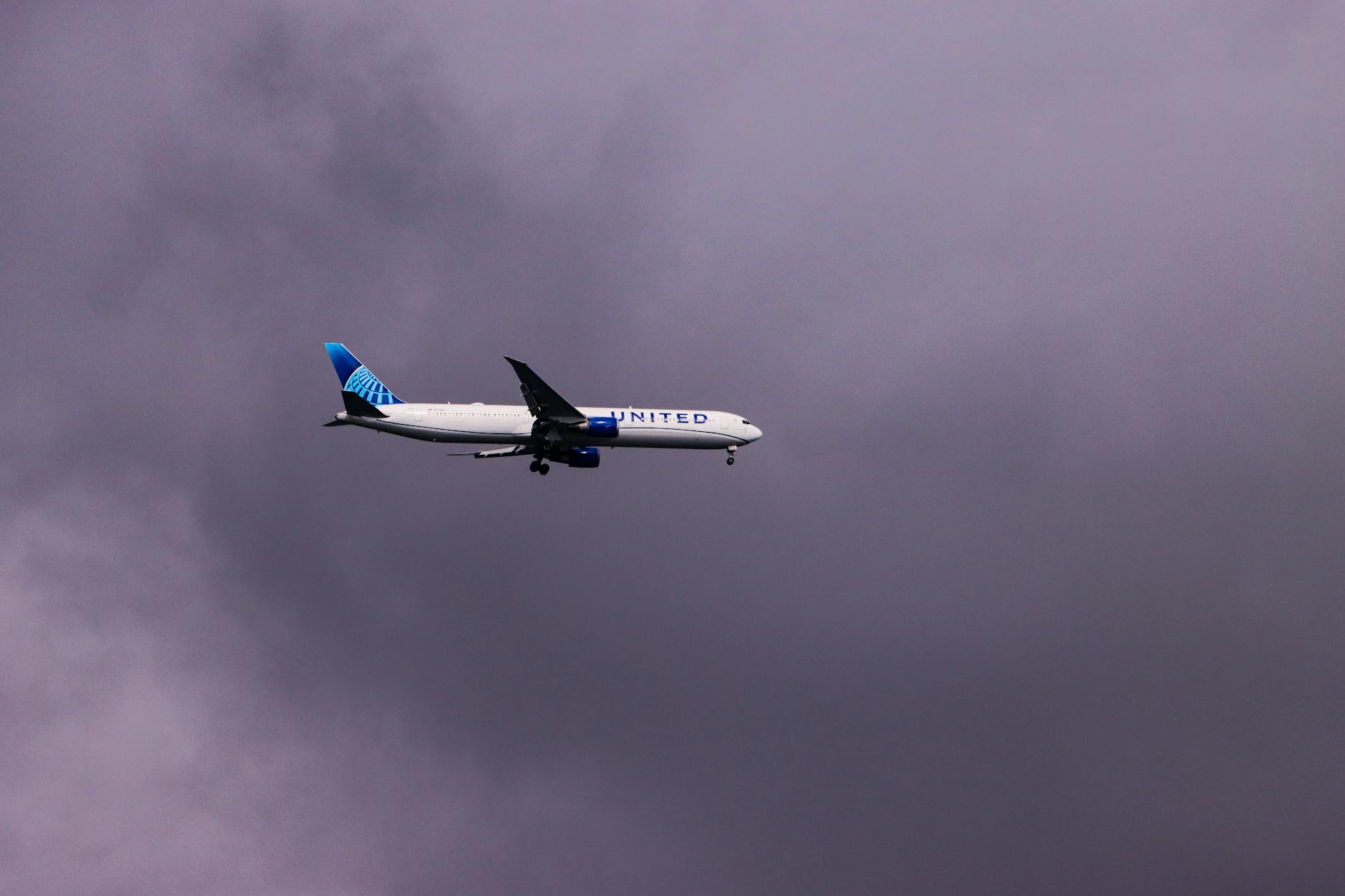
I think everybody is familiar with the idea of Basic Economy: the cheapest fare tier on most any airline these days is an economy flight experience that strips away nearly every facet of flying with the airline: non-refundable, no checked bags, last to board, no free seat selection – though all these seats can then be added back on for a fee. United has now taken the next logical step: the introduction of such ‘basic’ fares to premium cabin tickets.
Update: Delta has now also introduced a ‘basic business’ fare tier and unbundled all other fare buckets as well, in a similar way as United has done.
Table of Contents
United adds ‘Basic Premium Economy’ and ‘Basic Business’ fares
This was overdue, unfortunately, but I’m a little surprised that United ended up being the first one to implement this. That’s because Delta has been talking about implementing ‘basic’ fares in its premium cabins for quite a while now. With this introduction, United will further segment the fare categories that it offers. Just like there are flexible, standard and basic economy products, expect the same will happen in business class.
The truth is that this not new. Outside the US there have certainly been airlines that have started to change the business class fare tiers in a way that already reflects the idea of a ‘basic’ business class tier – they just haven’t called it that.
For example, Qatar Airways and Etihad’s lowest business class tiers have you pay a fee for seat selection and lounge access. British Airways has been charging for seat selection on a great deal of routes, and Lufthansa charging for all but the most basic of seat assignments in their new business class cabins is another example. From there, charging for lounge access, or providing access to more basic lounges, and reducing the number of checked bags, are easy next steps.

The way airlines spin these changes is by saying that stripping away some of the perks that bring comfort to the journey – or ‘unbundling’, as its typically called – allows them to lower prices: segmentation of the market theoretically lets people choose the ‘fare bundle’ that includes only the services they truly care about.
So, what specifically are the limitations of United’s ‘basic’ tiers?
Business class: what perks are removed in basic business?
The chart below, compiled by United Airlines, shows the full rundown of perks included in each business class fare bucket. First of all, you can see that, similar to economy, there are now basic (Base), Standard and Flexible fare buckets for business class. Briefly, here’s what stands out:
- You’ll have to pay for your seat;
- You get one checked bag rather than two;
- You don’t get access to the United Polaris Lounge, rather only to the Unite Club;
- The ticket is inflexible: no changes, no refunds, and no upgrades to United’s elevated business class plus product, Polaris Studio.
- Not in the chart but very important: you don’t earn qualifying flights from these flights, but you will earn qualifying points.

Premium Economy: what perks are removed in basic premium economy?
Premium Economy is also getting a basic tier, besides the standard and flexible tiers. The basic Premium Economy fare has much of the same restrictions as you get in basic business:
- You’ll have to pay for your seat;
- You get one checked bag rather than two;
- The ticket is inflexible: no changes, no refunds, and no upgrades to business class.
- Not in the chart but very important: you don’t earn qualifying flights from these flights, but you will earn qualifying points.

This is the start of a new trend: is it good or bad?
Frankly, I think these restrictions are a bit better than expected. To a large extent they mirror the restrictions we have seen in basic economy, including the seat selection fees, changes to checked luggage, and the ability to upgrade. However, to United’s credit, there is nothing (yet?) about a lower boarding priority, and I’m also glad to see that access to the United Club is provided, as I had expected lounge access to be taken away entirely.
What is rather a bummer is how these fares will not earn you qualifying flights, but only qualifying points. So, they only count towards one of the two metrics to earn status with United. Given that these tickets are still business class tickets and will cost several thousands of dollars, it’s rather disappointing that qualifyinf flights won’t be obtained from these basic fares.
In some ways, other airlines, such as Qatar Airways, have a different setup. For example, in their ‘Business Lite’ fare, you pay for seat selection but also miss out on lounge access. Though you can still bring two suitcases, so it represents a different mix of restrictions compared to United.
Two aspect of United’s implementation remain unclear.
The first is how elite status will factor into this. For example, as a Flying Blue elite I can book a basic economy fare with Air France or KLM and ultimately receive what is a standard economy experience, thanks to free seat selection (including extra legroom economy seats), priority boarding, extra checked luggage, etcetera. However, you are still bound by the restrictions on changes and cancelations. Will United follow the same path, or will they restrict the ability of elite status to elevate the basic fare form its restrictions, such as Delta does for its basic economy fare type?
The second aspect is pricing. Ideally, and the way this is being communicated, you’d hope that pricing stays the same for the standard and flexible tiers, and a new, cheaper tier is added for the basic tier. In practice, that’s not what seems to be happening. Right now it seems as though Basic Business is available on select routes to Europe, and only on those itineraries operated exclusively by United. See for exmaple the below itinerary from Newark EWR to Frankfurt FRA:

Due to the current state of the world and the consequences for oil prices it’s not necessarily all that easy to judge the changes in pricing, but Basic certainly isn’t far removed from the original ‘standard’ price, and I believe it’s absically the same price. That means you’re paying the old ‘standard’ price for the new ‘basic’ fare. So yeah, United Polaris just got more expensive.
The difference between tiers does seem at least somewhat reasonable, with $400-500 from basic to standard to flex. This would be in a range where people may ‘buy up’: nobody likes restrictions, so this would be an effective way to get people to spend more money than they otherwise would to circumvent restrictions.
That’s definitely an important factor when basic economy was once introduced: make it just punitive enough that people, faced with the restrictions, would choose to pay for the standard fare instead (which would be a bit more expensive than the standard fare would have been before the introduction of basic economy). And let’s face it, if you’re already splurging on business class, it’s not hard to imagine that somebody would want the full experience, including the Polaris lounge access.
So is this a good or a bad thing? I’d think this is a customer unfriendly move. As this gets rolled out, hopefully United will not raise business class fare too much across the board, and even if they do, perhaps elite status can mitigate some of the damage.
Summary
United Airlines has announced the introduction of a ‘basic’ fare type for both business class and premium economy. This will come with a series of restrictions that line up with those fined in basic economy. That would include seat selection for a fee, less checked baggage, and total inflexibility of the ticket, plus you’ll lose qualifying for elite flights toward statis. For business class specifically, that also means not being able to enter the Polaris lounge, though you’d still get United Club access. On the whole this seems to lead to more expensive fares all around, and so would likely end up being a negative change for customers.

Leave a Reply